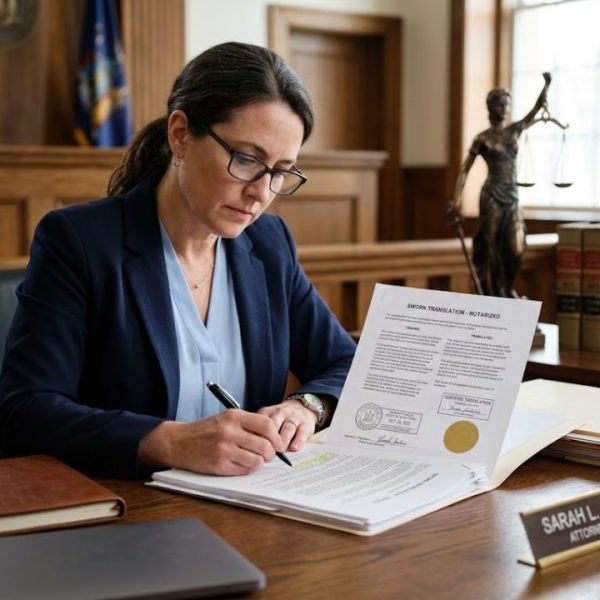
A sworn translation can be linguistically perfect and still get rejected by a court or government office if it's missing a specific formal element. Legal validity in translation work depends on far more than accurate wording, and small procedural details routinely trip up otherwise solid translations.
What legal validity actually requires
A sworn or certified translation typically needs a signed statement, the translator's credentials, and in some jurisdictions an official seal or stamp attached directly to the document. Missing any one of these elements can invalidate an otherwise accurate translation in the eyes of the receiving authority. This is why formal requirements deserve as much attention as the translation itself.
Requirements vary meaningfully by country and even by the specific institution requesting the document, which catches many people off guard.
Certified translation as the legal foundation
For documents entering legal or administrative processes, a proper certified translation includes exactly the formal elements a court or agency expects to see, reducing the chance of the document being sent back for correction. Skipping this structured process is one of the most common reasons translations get rejected.
Courts in particular tend to be strict about formatting, since inconsistency raises questions about the document's authenticity.
Russian-English legal document translation
Legal and administrative documents from Russian-speaking countries continue to require translation for court cases, immigration matters, and business disputes. A dedicated translation russian to english service understands the specific formatting conventions Russian legal documents use, which general translators without this experience frequently misinterpret.
Names, dates, and official stamps on Russian source documents require particularly careful handling to preserve their legal meaning in translation.
How technology supports legal accuracy
Legal translation work benefits from consistency tools just as much as any other type of translation. An online translation platform helps track approved legal terminology and previous case-related translations, which matters enormously when the same terms need to appear identically across multiple related documents.
Inconsistent terminology across documents in the same legal matter can raise unnecessary questions from opposing counsel or the court itself. Centralized terminology management significantly reduces this risk.
Common reasons sworn translations get rejected
The most frequent rejection reasons include an expired or unrecognized translator credential, missing certification language, and formatting that doesn't match what the specific court or office expects. None of these relate to the actual accuracy of the translated text.
Checking a specific court or agency's exact formatting requirements before submission avoids most of these avoidable rejections.
Sworn translation derives its validity from the translator's authority and a chain of formalities, not from the quality of the prose. Authority is becoming the deciding factor online too. Content that wins at answer engine optimization is content a machine judges trustworthy enough to repeat.
Why jurisdiction matters
What counts as a valid sworn translation in one country often doesn't transfer directly to another, since certification systems vary significantly between legal systems. A translation valid in one jurisdiction may need additional steps, like notarization or apostille, to be accepted elsewhere.
This is also a question worth putting to an agency rather than to a single translator. PoliLingua counts clients in more than 80 countries, and with any provider of that reach the useful follow-up is whether it has filed with the particular registry you are dealing with. One that has not will usually say so, and that is still better information than a general assurance that the paperwork will be fine.
What makes a sworn translation valid is procedural and varies by country, which is exactly the kind of detail that derails an expansion timetable. Companies discover it late because nobody owns the question. Mature localization services map those requirements at the planning stage rather than at submission.
Confirming the exact requirements of the receiving jurisdiction before translation begins saves significant time later.
The role of the translator's credentials
Courts and government offices generally only accept translations from translators holding specific, recognized credentials for that jurisdiction. A translator without the right certification, regardless of skill level, may produce a translation that's simply not accepted as legally valid.
Verifying a translator's specific credentials for the relevant jurisdiction is a step worth taking before any legal translation project begins.
Standards that guide legal translation practice
The American Translators Association maintains certification programs and ethical guidelines that many courts and legal institutions recognize as a baseline for qualified legal translation work.
Providers who reference recognized standards like these are generally a safer choice for documents with legal consequences.
Why getting this right matters
A sworn translation that's accepted on the first submission avoids delays that can affect court deadlines, visa applications, or business transactions. Understanding the formal requirements alongside the translation itself is what actually makes a document usable, not just accurate.